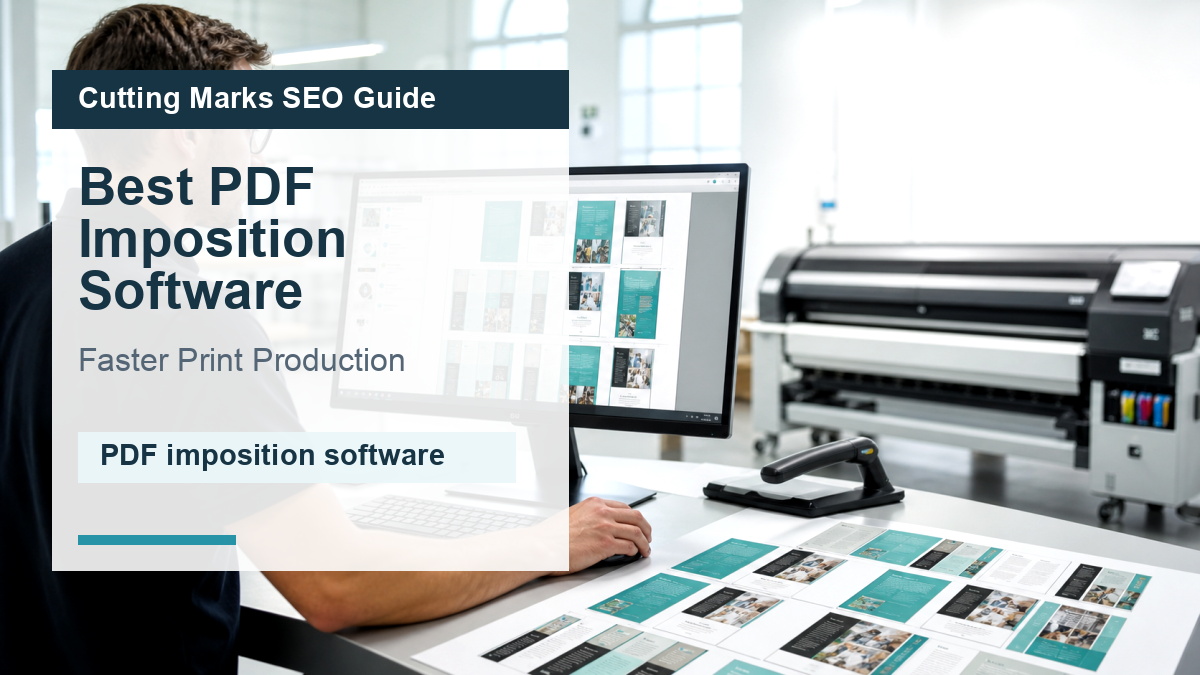


Print workflow automation for Korea digital printers should reduce repeated prepress setup while keeping operators in control of size, bleed, gutters, marks, and PDF quality.
For Korean print shops in Seoul, Busan, Incheon, Daegu, Jeju, the goal is not only to place more designs on a sheet. The layout must keep bleed, cutter grip, gutters, front/back alignment, and finishing order predictable. That is why a focused PDF imposition software workflow can be more reliable than manually copying artwork in a design application.
Why this matters for Korea digital print shops
Korea print shops often handle many small jobs in one day. Automation is useful when it removes routine steps, not when it hides production decisions from the operator.
Many Korean jobs are produced quickly in small or medium batches: campaign flyers, cosmetic insert cards, sample-kit labels, retail shelf talkers, business cards, event coupons, and short-run brochures. These jobs look simple, but errors usually happen at the sheet-planning stage: wrong bleed, mixed sizes, incorrect gutters, missing crop marks, or export settings that flatten vector artwork.
Production planning table
| Print job | Imposition requirement | Production benefit |
|---|---|---|
| Repeat flyers | Saved sheet and job presets | Less manual setup |
| Labels and stickers | Gap and mark presets | Cleaner finishing |
| PDF customer artwork | Controlled import and export | Better artwork consistency |
Practical setup example
For a typical repeat flyers job, start by confirming the finished trim size from the customer PDF. Add bleed before calculating rows and columns, then add a realistic gutter for cutting, sorting, or folding. If the job is for a Korean beauty, retail, event, or local business campaign, keep small text, QR codes, and brand marks safely inside the trim line instead of pushing every element to the edge.
On an A3 or SRA3 digital press sheet, the operator should compare the mathematical UPS count with the production-safe UPS count. The mathematical count may fit more copies, but the production-safe count leaves space for crop marks, sheet handling, cutter tolerance, and inspection. This is especially important for premium cosmetic inserts, labels, cards, and flyers where a small finishing error can make the piece look low quality.
A practical prepress rule is to save separate presets for each repeated job family. One preset can hold flyer settings, another can hold business card duplex settings, another can hold label gaps, and another can hold booklet page-order rules. This avoids forcing Seoul, Busan, Incheon, Daegu, Daejeon, Gwangju, Suwon, Ulsan, and Jeju jobs into one generic layout.
Recommended imposition workflow
- Create presets for common job families.
- Keep operator controls visible for size and bleed.
- Use preview before export.
- Track which preset was used for repeat jobs.
- Review failed or unusual jobs instead of forcing automation.
Quality checks before export
Before exporting the imposed PDF, check four production details: the original artwork size, the added bleed, the true printable sheet area, and the mark position. If the artwork is a vector PDF, the exported file should preserve sharp text and lines. Rasterizing or flattening unnecessarily can reduce quality on small type, QR codes, fine borders, and crop marks.
Also review whether the layout will be easy for the finishing team. A sheet that saves a little paper but slows cutting, sorting, or packing may not be the best workflow. Good imposition balances sheet efficiency with predictable finishing, operator confidence, and fewer remake risks.
Customer communication notes
For Korea print customers, explain the production choice in simple terms: finished size, bleed, sheet size, expected quantity per sheet, and whether the job needs single-sided, duplex, folding, or label finishing. This helps customers approve artwork faster and helps the print team avoid rework caused by unclear trim size, missing bleed, or late size changes.
When the same team handles repeated jobs across Seoul, Busan, Incheon, Daegu, Daejeon, Gwangju, Suwon, Ulsan, and Jeju, saved sheet presets make production more consistent. A shop can define common A3, SRA3, or custom digital press sheets, then reuse the same bleed and gutter rules for similar jobs.
City-focused opportunities
Seoul
High job variety makes automation valuable for agencies, beauty brands, retail, events, and business customers.
Busan
Tourism, food, retail, and regional promotions can use saved flyer and menu presets.
Incheon
Packaging inserts, logistics labels, and local commercial jobs benefit from consistent PDF preparation.
Common mistakes to avoid
- Automating without checking preview.
- Using one preset for every customer job.
- Ignoring exceptions such as unusual stock or finishing.
- Measuring success only by highest UPS instead of reliable output.
How Cutting Marks supports this workflow
Cutting Marks helps print teams prepare production-ready imposition layouts with job size, sheet size, bleed, margin, gutter, UPS/N-up planning, crop marks, and PDF export controls in one workflow. If your team is comparing manual setup with best imposition software options, focus on repeatability, operator control, and clean PDF output rather than only the highest theoretical sheet count.
For commercial comparison and trial planning, review Cutting Marks pricing and choose the setup that matches your daily job mix.
FAQ
Should automation replace the prepress operator?
No. It should remove repetitive layout work while keeping key production choices visible and adjustable.
What should Korea printers automate first?
Start with repeat flyers, cards, labels, and PDF imposition presets before moving into more complex booklet or packaging workflows.
Conclusion
The best automation strategy for Korea print shops is practical and controlled: save repeat setups, preview output, and protect production quality.